

BY: Robert Charles Jowaiszas & Keith S. Shikowitz Editor in Chief
Walking Into Capri – Nanuet
The first thing you notice when you walk into Capri Cosmetology Learning Center is movement. Water runs steadily at the shampoo sinks. Hair is rinsed, sectioned, and watched carefully. Students move between chairs and stations, combs and brushes in hand, checking mirrors and timing. Instructors pause nearby — observing, offering quiet guidance, stepping in when needed — correcting a hand position here, a technique there, without taking over.
It feels busy, but focused. Less like a classroom, more like a working salon that also happens to be a place of learning.
At the front desk, Michelle, Capri’s front-end manager, greets clients as they arrive, answers phones, checks schedules, and eases nerves before anyone sits in a chair.
“Most people walk in a little nervous,” Michelle said. “My job is to make them feel comfortable right away. Once they relax, everything else falls into place.”
Behind her, the day continues to unfold — clients waiting, students preparing, instructors watching closely. Confidence is built in real time, one appointment at a time.
Capri as a Third Place
Capri functions as more than a school or a salon. For many clients and students, it becomes something in between — a familiar place that isn’t home and isn’t work but still feels personal.
“People come in for a service,” Michelle said, “but they stay because they feel welcome.”
Longtime client Carol Corngold, a nurse and therapist, said that sense of comfort is what keeps her coming back.
“It’s relaxing,” Carol said. “You talk. You decompress. There’s a bond. It’s not just hair — it’s human.”
From Ancient Ritual to Modern Beauty
Long before ring lights, influencer tutorials, and salon reels, hair and makeup were already part of human history. In ancient Egypt, cosmetics were used for ritual, health, and protection. Kohl lined the eyes not only for beauty, but to guard against glare and infection. Wigs signaled status. Oils, pigments, and early skincare blended art and science, passed down through generations.
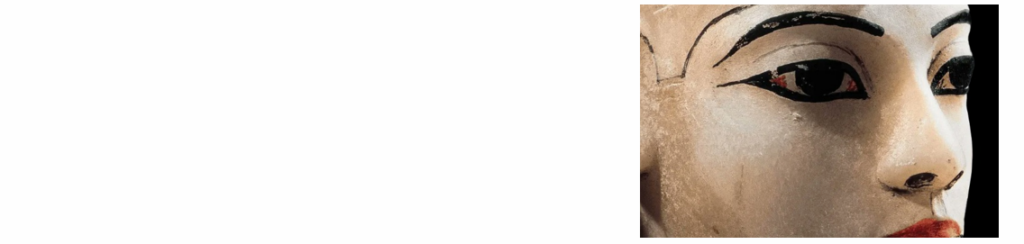
Through the centuries, beauty followed culture. In ancient Greece and Rome, appearance reflected balance and refinement. In the Middle Ages, pale skin signaled class. By the Renaissance, hair, fragrance, and cosmetics became symbols of power and wealth. Each era left its mark not just on faces, but on society’s understanding of beauty as identity.
Hollywood, Hair, Makeup, and the Evolution of Style
By the time Hollywood emerged in the early 20th century, hair and makeup became something else entirely: aspiration. Silent film stars helped define iconic looks. Old Hollywood glamour — sculpted waves, red lips, flawless skin — turned beauty professionals into unseen architects of celebrity.
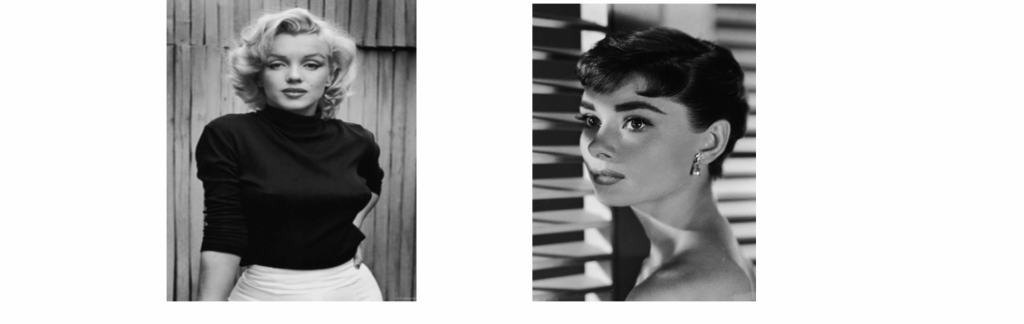
Marilyn Monroe popularized soft waves and polished volume, while Audrey Hepburn embodied clean lines and understated elegance. These opposing styles reinforced a truth that still holds today: beauty was never meant to look the same on everyone.
“In the 1990s, when Jennifer Aniston’s haircut on Friends became popular, everyone wanted it,” said Heidi, Capri’s director. “Trends come and go, but when something hits culturally, it spreads fast.”
“If someone asks for a 1960s look or a 1970s look,” said Joe, one of Capri’s instructors, “you need to know exactly what that means.”
Beauty as Both Art and Science
While cosmetology is often viewed through a creative lens, professionals inside the industry know it is equally technical. Understanding chemistry, skin conditions, hair textures, sanitation, and product interaction is essential — especially as clients become more informed and diverse.
“People come in with inspiration photos,” Joe said. “But you still have to look at skin tone, hair texture, consultation, and what’s realistic. Makeup and skincare are emotional. You have to ask the right questions.”
“Trends are cyclical,” Heidi added. “We focus on fundamentals so when something comes back — and it always does — students are ready.”
She said trends often start conversations rather than dictate outcomes.
“Students see styles and techniques online and bring them onto the clinic floor,” Heidi said. “Then we talk about how to adapt them for real hair and real people. That’s where the learning really happens.”
Skill, Soft Skills, and the Human Side of the Trade
A successful cosmetology career requires balance. Mastery of cutting, coloring, styling, nails, and skincare matters — but so do communication, time management, confidence, and empathy.
“A lot of students know how to do makeup on themselves,” Joe said. “The real skill is learning how to do it on other people.”
“You’re not just applying product,” he added. “You’re dealing with emotion.”
“You have to be calm, cool, and confident,” said Melissa an esthetics coach at Capri. “Even if you’re nervous inside, the client shouldn’t feel it.”
Learning Under Pressure — and Loving It
On the clinic floor, Danielle, a senior cosmetology student, worked carefully on an advanced color project — a bold red with a soft pink halo.
“Bleach starts working the moment you put it on,” she said. “You have to work fast, check constantly, and make sure you don’t over-process. It’s like racing the clock.”
She said understanding color theory changed how she approached her work.
“Once you understand undertones, everything changes,” Danielle said. “You stop guessing and start knowing why hair turns brassy or muddy.”
Nearby, Leilani focused on an intricate updo.
“I love curls,” she said. “If the base isn’t right, nothing holds.” She said learning to respect texture was key.
“Every curl pattern behaves differently,” Leilani added. “You can’t force it. You have to work with what the hair wants to do.”
“You’re scared at first,” she admitted. “Because if you mess up, they walk out with it. But the coaches are always there. You’re never on your own.”
Tour of Capri to be continued: