
BY: Keith S. Shikowitz, Editor in Chief/Investigative Reporter
Robert Jowaiszas, Community Editor/Reporter
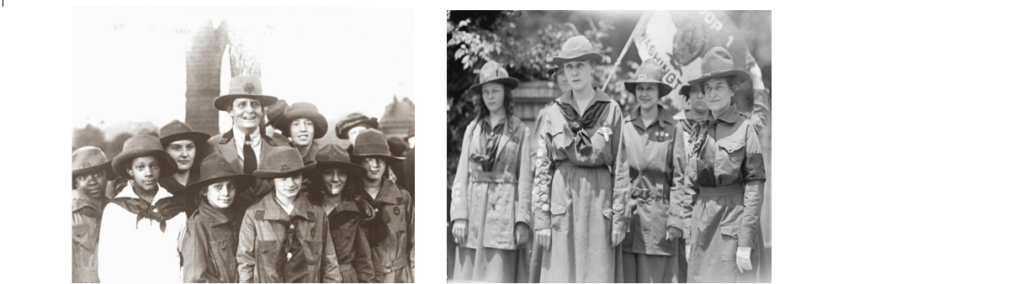
The Girl Scout movement in the United States began in 1912, when Juliette Gordon Low founded the first troop in Savannah, Georgia. Her idea was inspired during her time in England, where she met Robert Baden-Powell, founder of the Boy Scouts, and saw the early development of youth scouting. She was also influenced by his sister, Agnes Baden-Powell, who helped establish the Girl Guides, an organization created so girls could participate in similar outdoor and leadership activities.
What Juliette Gordon Low saw in England was a growing movement built around outdoor skills, self-reliance, leadership, and service. The Boy Scouts and Girl Guides showed her that young people could learn practical life skills through experience rather than formal instruction. She did not simply copy the model but adapted it for American girls and communities. From that idea, she created what became Girl Scouts of the USA.
Starting with just 18 girls, she built a program centered on independence, community service, and hands-on learning—one that quickly spread across the United States.
The Hudson Valley and the merger
In the Hudson Valley, Girl Scouting grew for decades through separate county councils. Rockland, Westchester, Orange, Putnam, Dutchess, Ulster, and Sullivan counties each operated their own troops, camps, and leadership structures, keeping scouting deeply local.
In the early 2000s, these councils merged into a single regional organization known as Girl Scouts Heart of the Hudson. The goal was to streamline operations, strengthen programming, and expand opportunities across counties while still keeping troops rooted in local communities. Meetings continued in schools, churches, and community centers, but with shared regional support.
Badges and journeys
Badges represent structured learning experiences where girls complete activities and demonstrate skills in areas such as outdoor adventure, STEM, leadership, entrepreneurship, and the arts.
Journeys combine multiple activities into larger themes focused on leadership, teamwork, or community impact, providing a structured path of growth.
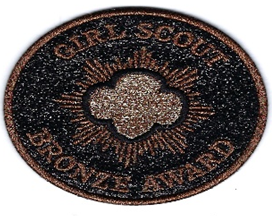
Speaking of badges, on May 2, 2026, the Girl Scouts Heart of the Hudson council held their Bronze Awards ceremony at the Palisades Mall.
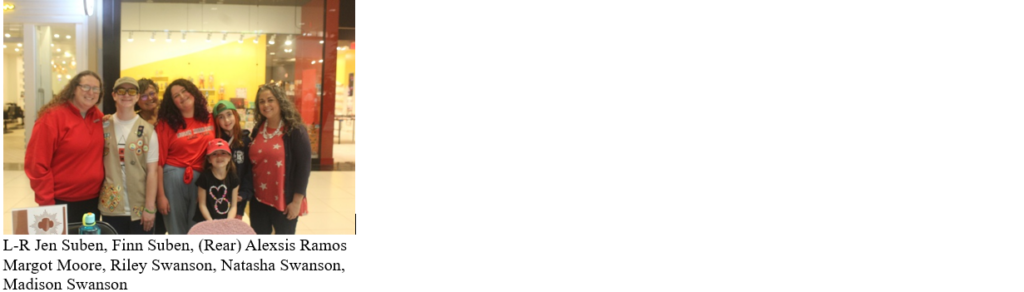
One of the booths was the Hudson Hurricanes a Girl Scout canoe team for ages 11 to 18. “We practice at Camp Addison Boys, in Tompkins Cove from March to May, and we race Memorial Day weekend in Bainbridge, New York. This is my 4th year on the team. I really enjoy it.” Said Finn Suben.

What inspired Finn to get into this? He mom and grandma were both Girl Scouts. So she was inspired to be a part of the Girl Scouts and found out from a friend about this team actually at camp one year and joined from there.
It seemed that a number of the girls have a family history of Girl Scouting. Margot Moore said that Maddie’s aunt was on the team a few years ago. “She got here because of me because we’re cousins, but I’ve been on this team in my 2nd year.
How much work do you guys have to put in to help them?
“Well, this is our first year on the Hurricanes, so we’re kind of new, learning the ropes, but it’s been around since what, 1976.” Said Natasha Swanson, adding that they’ve got a legacy of winning, a tough team to beat from what I’ve heard. “Right now, we’re trying to get more people involved, so, you know, grow the team a bit more. They currently have 4 kids on the team.”
Jen Suben smiled and replied to my question about parental involvement. “You asked, parent involvement is for us, I mean, a lot of times what happens is with the team and the coaches that they want the parents to have more hands off to make it so that the that the kids and the scouts can be more independent and do all the things themselves. They learn about the boats and how to use them, how to take care of them, and so, we’re pretty much on the sidelines, but. None of the three of us can paddle a canoe.
We’re here at Palisades Mall again with Girl Scouts from Troop 1623 from Mount Vernon. Their project was called Project Emotion.

It’s about handling your feelings.
The ceremony started with the color guard presenting the flags to the front of the area by the podium. Next was the Pledge of Allegiance and then the Girl Scout Oath and Motto.
Caitlin Gant, Girl Experience Program Specialist announced the 2026 Bronze Award Girl Scouts. The award winner’s projects included Blood Drives, Emotional awareness, Caring Ramps, Parent Pick up and Drop off, Garden of Faith and many others.
Shelly Ramos’s project was the Blood Drive. She did it because she is a cancer survivor and has had to get 20 transfusions. “So, I do blood drives so like if someone gets in an accident or like they need blood. Like you can go to a blood drive and like since there’s 8 different types of blood in case like the person doesn’t have the same blood as another person does. And if you donate, if one person donates, it can save 3 people’s lives.
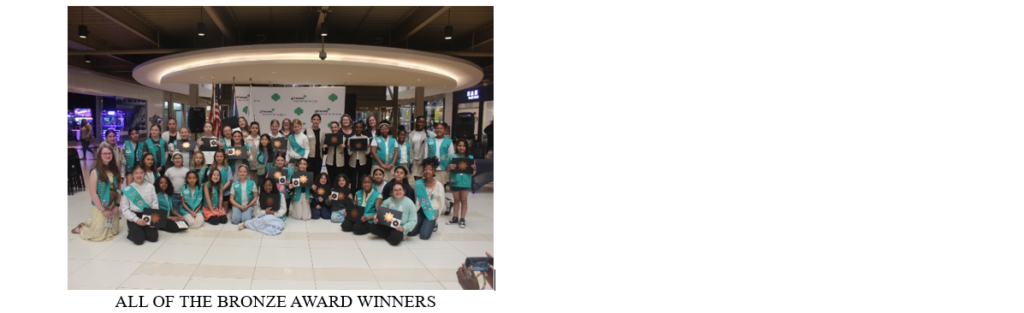
These projects are only a part of what the Girl Scouts do for the community. The organization helps the girls to become better citizens and a contributing part of their local neighborhoods. There are many traditions embedded in Girl Scouting. One of the things they do is send valentines cards to veterans.
Cookie tradition
The Cookie Program began in the 1930s as a small local fundraising effort and grew into a national entrepreneurship program. In the Hudson Valley, cookie booths are a familiar seasonal presence outside stores and community events.
Popular varieties include Thin Mints, (MOST POPULAR) Samoas, Tagalongs, Do-si-dos, and Trefoils. Beyond fundraising, the program teaches goal setting, money management, communication, teamwork, and business skills.

Community service and local traditions
Service is a consistent part of Girl Scout life. Troops across the Hudson Valley participate in food drives, park cleanups, and volunteer projects with local organizations.
Around Valentine’s Day, girls often create handmade cards for classmates, seniors, hospital patients, or community members—small acts centered on kindness and connection.
Troops also participate in veterans’ events, especially Veterans Day and Memorial Day, including ceremonies, flag placements, letter writing, and partnerships with American Legion and VFW posts.
Veterans: then and now
Historically, Girl Scouts participated in more formal civic traditions such as parades, flag ceremonies, and cemetery flag placements. Today, those traditions continue but are often more locally driven and service-focused, including visits, care packages, and community remembrance events.
What has changed is format; what remains the same is respect for service and remembrance.
Uniforms: tradition and change
Uniforms have evolved significantly over time. Early uniforms were more formal and military-inspired, while mid-century versions used standardized brown and green outfits with badges displayed on sashes or vests.
Today, uniforms are more flexible and practical, usually consisting of a vest or sash worn over a simple shirt. This allows girls to display achievements while remaining comfortable for activities.
Uniforms are most often seen at ceremonies, parades, cookie booths, and service events, symbolizing identity, achievement, and belonging.
Membership and growth
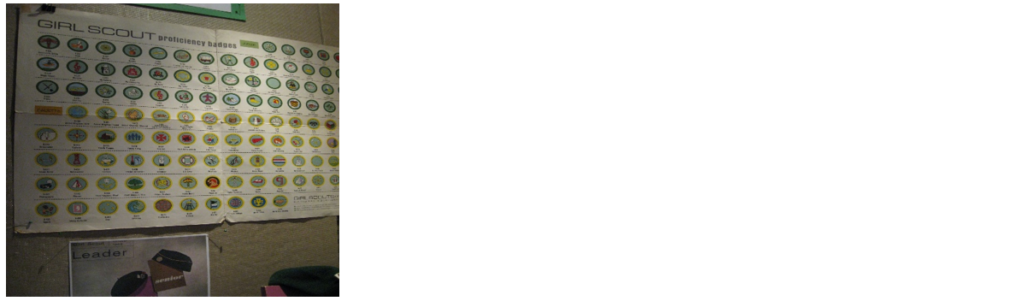
Membership is organized by age level, with each stage building on the previous one. Younger girls focus on teamwork and foundational skills, while older members take on leadership roles, mentor younger scouts, and complete larger community projects. The picture below shows the badges the girls can earn by their activities showing their growth and education over years.
Local leadership
While national leadership guides the organization, day-to-day Girl Scouting in the Hudson Valley is shaped by local volunteers, troop leaders, and council staff who organize meetings, activities, and service projects within their communities.
Across the Hudson Valley, Girl Scouting remains a blend of global influence, national history, and local tradition—rooted in ideas first seen in England, shaped by Juliette Gordon Low in 1912, reorganized through regional mergers in the early 2000s, and carried forward by community-based troops focused on leadership, service, and growth.