
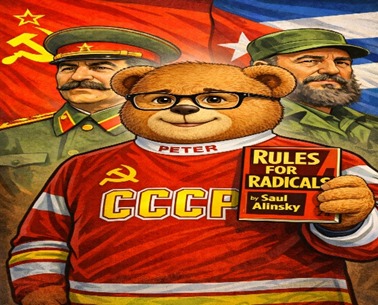
Peter Chatzky, the former mayor and deputy mayor of Briarcliff Manor and a financial-technology executive, has emerged as a leading contender in the Democratic primary for New York’s 17th Congressional District, which includes all of Rockland County and much of southern Westchester and is currently represented by Mike Lawler. Chatzky presents himself as a results-oriented local executive, pointing to his record in village government, where he managed budgets, upgraded infrastructure and helped organize opposition to a proposed Trump golf-course development, as evidence that he can take on powerful interests and deliver for suburban communities. His private-sector career running a software and financial services company, which serves major banks and financial institutions, is a central part of his campaign narrative, emphasizing job creation, economic management and practical experience.
From the start, Chatzky’s campaign has been notable for its financial strength. Federal filings show he has raised more than $6 million, but the overwhelming majority — about $5.75 million — comes from loans he made to his own campaign, leaving him with more than $5.5 million cash on hand. His closest rivals, Cait Conley and Beth Davidson, have raised approximately $1.9 million and $1.49 million, respectively, with substantially less cash on hand. This stark difference underscores a central tension in the race: while the candidates’ messaging focuses on affordability, taxes and cost-of-living issues, the campaigns themselves are being funded largely by personal wealth and professional networks rather than small donations from working-class voters. As was shown in a Rockland Post article, Davidson has approximately 70 – 80% of HER money from outside the state and district. Critics argue this disconnect raises questions about whether candidates who live in affluent suburbs and are able to self-fund can truly relate to the economic realities of lower- and middle-income families in Rockland and Westchester.
The tension is most evident around issues like housing and immigration. Chatzky and other progressive candidates, including Davidson and supporters of Zohran Mamdani, have made calls for more affordable housing and limitations on ICE enforcement central themes of their platforms. Supporters argue that federal policy on health care, taxation and housing affects all residents, regardless of wealth, and that candidates do not need to be poor to enact policies that help working families. Critics counter that affluent candidates often live in communities largely insulated from the pressures of overcrowded housing, rising rents and immigration enforcement, and that voters measure authenticity not just by policy proposals but by personal experience and understanding of day-to-day challenges. This is especially true in a district where young families struggle to buy homes and seniors face rising costs, and where kitchen-table conversations frequently revolve around property taxes, public safety, school costs and commuting pressures.
Chatzky’s platform highlights restoring the full SALT deduction, lowering health-care and prescription drug costs, (which the Trump administration is already doing) expanding universal pre-K, promoting affordable housing, banning stock trading by members of Congress, reforming the Supreme Court, safeguarding Social Security and Medicare, and investing in clean energy and infrastructure. He has positioned himself as a strong progressive voice with a focus on flipping the seat from Republican control, while critics caution that his rhetoric and policy emphasis may resonate with the party base but could be a harder sell in the general election to moderate and working-class voters.
The primary remains competitive despite Chatzky’s financial advantage, with a large block of undecided voters and no candidate having consolidated clear dominance. For Rockland County residents, the central question is whether candidates like Chatzky can translate wealth, experience and progressive messaging into an understanding of and effective action for the economic realities of the district’s diverse communities, or whether the race will become defined by the gap between campaign resources and the lived experience of the voters who will decide it.
If you watched the Virginia and New Jersey governor’s races, you saw the two winners portraying themselves as moderates, yet when they won, the swung far left implementing radical laws that restrict the rights of their states people. This is a pattern with the democrats all over the country and we can only expect the same from Chatzky.
We need to make sure that this type of “politician” does not EVER end up representing us here in the 17th Congressional District or anywhere else in NY.