
Community op-ed perspective
Recent anti-ICE rallies held in Nanuet are part of a broader, nationally connected protest movement opposing federal immigration enforcement, even as demonstrations in Rockland County itself have remained peaceful and orderly.
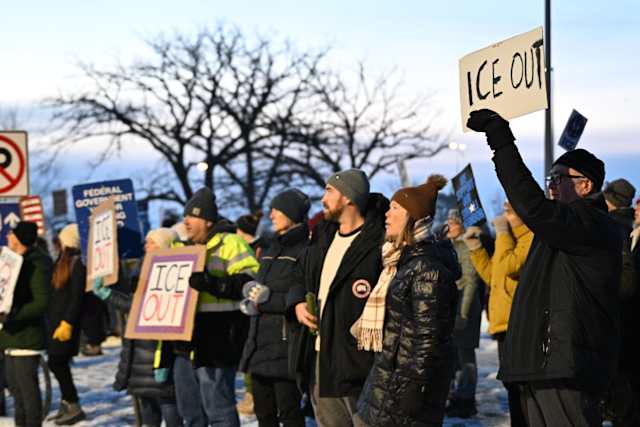
Locally, gatherings have taken place at Nanuet’s well-known Four Corners intersection, where Route 59 meets North Middletown Road. The site has long been used for demonstrations and free-speech activity in Rockland County, dating back decades, and continues to serve as a highly visible forum for public expression.
Local activist organizations, including Indivisible Rockland, have promoted the rallies through websites and social media, listing dates, times, and themes and encouraging residents to participate. Organizers describe the demonstrations as peaceful expressions of opposition to the policies and actions of U.S. Immigration and Customs Enforcement, and stress that participants are expected to comply with the law.
While Rockland County events have not seen violence, the national context has grown more volatile. Following the January 2026 fatal shooting of Renee Nicole Good during an ICE encounter in Minneapolis, protests spread rapidly to major metropolitan areas including New York City, Chicago, and Los Angeles. In several of those cities, authorities reported incidents involving objects thrown at federal agents, attempts to block ICE vehicles or facilities, physical confrontations, arrests, and the use of crowd-control measures. Federal officials have confirmed that ICE agents were injured in some of those incidents, while also noting that most demonstrations nationwide remain non-violent.
From a more conservative or public-order perspective, the contrast between peaceful local rallies and confrontational national protests underscores a key concern: how quickly demonstrations can shift when tensions escalate. Critics argue that while protest is a protected constitutional right, repeated rallies targeting law-enforcement agencies risk normalizing hostility toward officers who are enforcing laws passed by Congress, not writing them.
They also point to the Four Corners’ location — a busy commercial and commuter intersection — as raising legitimate questions about traffic disruption, public safety, and the strain placed on local police resources, even when protests remain calm. Some residents have expressed concern that what begins as peaceful assembly could, over time, mirror the unrest seen elsewhere if emotions intensify.
Supporters of the rallies counter that continued peaceful conduct in Nanuet shows that local organizers and participants are capable of exercising free speech responsibly. Still, opponents maintain that town officials and law enforcement should remain vigilant, ensuring that demonstrations do not interfere with daily life or compromise safety.
As anti-ICE protests continue nationwide, Nanuet’s Four Corners once again reflects a familiar Rockland County tension: balancing the right to protest with the need for public order, safety, and respect for the rule of law — a debate likely to persist well beyond the current moment.